Click to Play
Winnie Pooh
Puzzle4.0555 plays
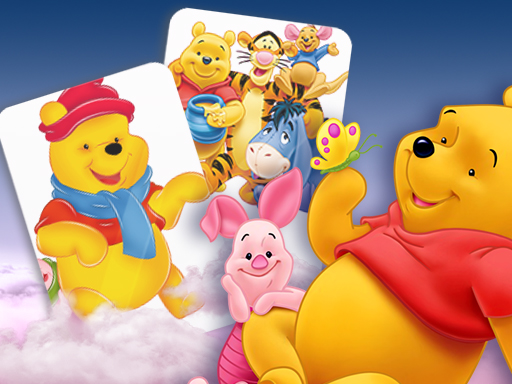
Winnie-the-Pooh, also called Pooh Bear, is a fictional anthropomorphic teddy bear created by English author A. A. Milne. The first collection of stories about the character was the book Winnie-the-Pooh (1926), and this was followed by The House at Pooh Corner (1928). Milne also included a poem about the bear in the children's verse book When We Were Very Young (1924) and many more in Now We Are Six (1927). All four volumes were illustrated by E. H. Shepard. The Pooh stories have been translated into many languages, including Alexander Lenard's Latin translation, Winnie ille Pu, which was first published in 1958, and, in 1960, became the only Latin book ever to have been featured on The New York Times Best Seller list.
How to Play
If you love the feeling of a puzzle clicking into place, Winnie Pooh is for you. Think about what each move opens up two or three steps later — short-term wins can trap you. Controls: Use the mouse to interact with the board. On touch devices, the same gestures apply — no special inputs to learn. Tips to get better: Your worst runs are usually the most educational. Note what went wrong before restarting. When in doubt, slow down. Panic costs more runs than any single hard section does. Look at what the top scores on leaderboards have in common — it's usually a specific strategy. If you're drawn to games with a winnie, pooh flavor, Winnie Pooh hits that spot cleanly. Every run in Winnie Pooh is a chance to do better than the last — that's the whole promise.